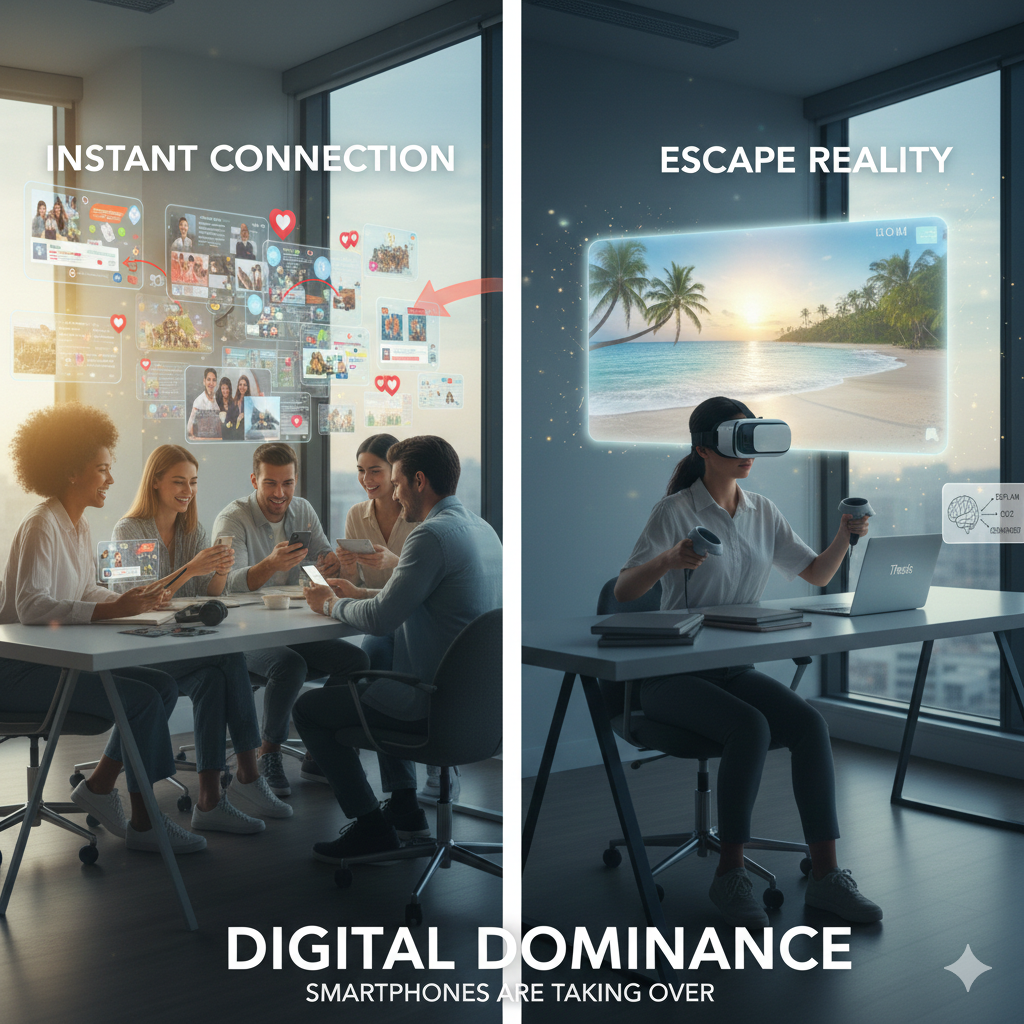
Have you ever looked at your phone and realized you’ve been scrolling for 30 minutes without even noticing? You’re not alone. Smartphones have become such an essential part of modern life that many of us can’t imagine a day without them. But why are smartphones slowly taking over our lives, and what does that mean for our health, productivity, and relationships?
How Smartphones Became So Powerful
Smartphones are not just communication tools—they are mini-computers in our pockets. They allow us to:
- Check social media
- Read news instantly
- Watch videos and play games
- Shop online
- Work remotely
This level of access to information and entertainment has rewired the way we think and behave. Our brains are constantly stimulated by notifications, likes, and new content, creating a feedback loop that keeps us glued to the screen.
The Psychology Behind Smartphone Addiction
Why do we feel compelled to check our phones every few minutes? Several psychological factors are at play:
- Dopamine Rewards – Every notification or social media like triggers a small dopamine release, making us feel good and reinforcing the behavior.
- Fear of Missing Out (FOMO) – Smartphones keep us connected to the world, but they also make us anxious about missing updates, messages, or trending news.
- Instant Gratification – With access to endless entertainment, we are trained to expect immediate rewards, which makes patience harder to maintain.
- Multitasking Illusion – Phones give the impression that we’re productive by checking emails or social media while doing other tasks—but this often reduces focus and efficiency.
How Smartphones Affect Our Health
Excessive smartphone use can impact both mental and physical health:
- Sleep Disruption – Blue light from screens interferes with melatonin, making it harder to fall asleep.
- Eye Strain – Prolonged screen time can lead to digital eye strain, headaches, and blurry vision.
- Stress and Anxiety – Constant notifications and social comparison can increase cortisol levels, contributing to anxiety.
- Neck and Posture Issues – “Text neck” from looking down at phones can lead to long-term posture problems.
Even small changes, like limiting screen time before bed, can have a big impact on health and wellbeing.
Smartphones and Productivity
While smartphones make work easier in many ways, they can also drain focus and efficiency. Constant notifications, emails, and social media alerts interrupt deep work, making it harder to complete tasks.
Tips to reduce smartphone distraction include:
- Turning off unnecessary notifications
- Using “Do Not Disturb” mode during work
- Allocating specific times for email and social media
- Keeping the phone out of reach during important tasks
By controlling smartphone use, you can take back hours of productive time every day.
How Smartphones Affect Relationships
Do you ever notice friends or family members scrolling during dinner or a conversation? Smartphones can impact relationships in several ways:
- Reduced face-to-face interaction – People spend more time on their screens than with each other.
- Lower empathy and attention – Constant multitasking makes it harder to actively listen.
- Social comparison – Seeing curated lives online can create jealousy, insecurity, or dissatisfaction.
Being mindful of smartphone use during social moments can strengthen bonds and improve emotional connection.
Are Smartphones All Bad?
Not at all. Smartphones have revolutionized communication, access to knowledge, and convenience. They allow people to:
- Connect with loved ones instantly
- Access educational content
- Work remotely or manage finances
- Explore hobbies and creative outlets
The challenge is balance. Smartphones are tools, not masters.
How to Take Control of Smartphone Use
Here are practical strategies to prevent smartphones from taking over your life:
- Set Screen Time Limits – Most phones have features that track usage and allow limits on apps.
- Schedule Phone-Free Time – Dedicate parts of your day to being fully offline.
- Turn Off Notifications – Only allow alerts for urgent apps.
- Practice Mindful Use – Ask yourself before picking up the phone: “Do I really need this right now?”
- Replace Screen Time With Other Activities – Read, exercise, meditate, or spend time with loved ones.
Conclusion
Smartphones have become a powerful force in modern life—both a blessing and a potential distraction. They can enhance productivity, connection, and knowledge—but unchecked, they can take over our time, health, and relationships.
Ask yourself today: “Am I using my smartphone, or is it using me?” Small changes and mindful habits can help you regain control, improve focus, and enjoy a healthier, more balanced life.