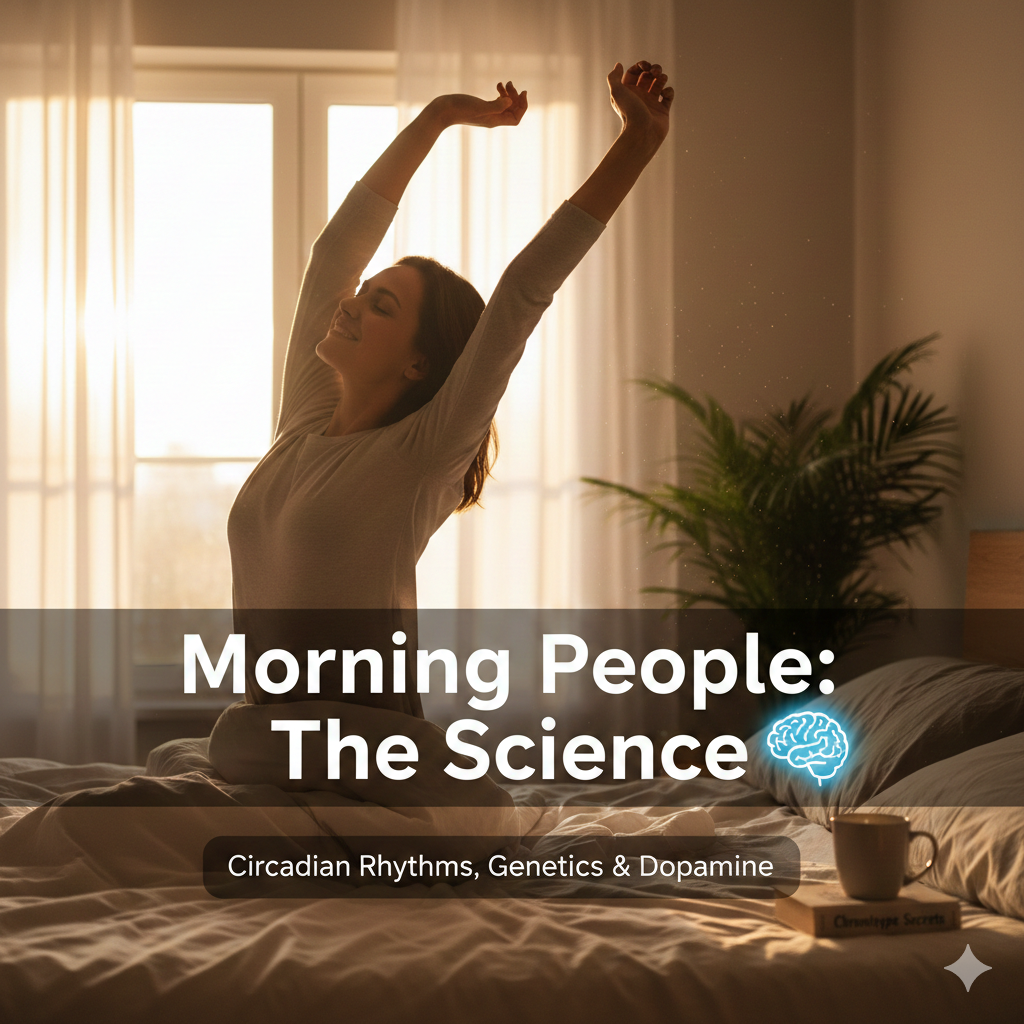
Do you know someone who wakes up at 5 AM full of energy, ready to tackle the day, while others hit snooze multiple times and drag themselves out of bed? Why are some people naturally morning people, and others are night owls? Understanding this difference can help you optimize your routine, productivity, and energy.
What Makes Someone a Morning Person?
Being a morning person, or “early bird,” is not just a personality quirk—it’s influenced by biology, habits, and lifestyle. Key factors include:
- Circadian Rhythm – Your body has an internal clock that regulates sleep, wakefulness, and hormones. Morning people have rhythms that favor early wake times and peak energy in the morning.
- Genetics – Some people are naturally predisposed to be early risers. Studies suggest genetics influence chronotype, or preferred sleep/wake patterns.
- Habits and Environment – Exposure to sunlight, regular schedules, and evening routines shape your sleep patterns over time.
- Lifestyle Choices – Diet, exercise, and caffeine intake can affect whether you feel alert in the morning or evening.
Benefits of Being a Morning Person
Morning people often experience several advantages:
- Higher Productivity – The brain is alert and focused after sleep, making it easier to tackle important tasks.
- Better Mood – Early exposure to natural light helps regulate mood-related hormones like serotonin.
- Healthier Habits – Morning people are more likely to exercise, eat breakfast, and maintain a consistent routine.
- Less Stress – Starting the day early provides a head start, reducing last-minute rush and anxiety.
Why Night Owls Struggle
If you’re naturally a night owl, mornings can be challenging due to:
- Misaligned circadian rhythm, making early wake times unnatural
- Sleep deprivation from staying up late and waking early
- Less exposure to morning sunlight, which regulates energy and mood
- Increased temptation to rely on caffeine to stay alert
Night owls often perform best in the afternoon or evening, and forcing early wake times may temporarily reduce performance and mood.
How to Become More of a Morning Person
Even if you’re a night owl, small changes can shift your rhythm:
1. Gradually Adjust Bedtime
Go to bed 15–30 minutes earlier each night until you reach your desired wake-up time. Gradual changes make it easier for your body to adapt.
2. Wake Up at the Same Time Daily
Consistency is key. Waking up at the same time—even on weekends—trains your internal clock and improves energy levels.
3. Get Morning Sunlight
Exposure to natural light in the morning helps reset your circadian rhythm and boosts alertness. A short walk or opening blinds immediately after waking works wonders.
4. Avoid Caffeine and Screens Before Bed
Caffeine and blue light can delay sleep onset. Avoid coffee, energy drinks, and phone or computer screens 1–2 hours before bedtime.
5. Develop a Morning Routine You Love
Make mornings enjoyable with:
- A warm shower
- Morning exercise or stretching
- A healthy breakfast
- Journaling or planning your day
Having a routine you look forward to makes waking up early easier and more rewarding.
6. Limit Evening Stimulation
Reduce late-night work, social media, or intense exercise close to bedtime. A calm evening routine supports faster sleep onset and better morning energy.
Fun Facts About Early Birds
- Famous morning people include Oprah Winfrey, Tim Cook, and Michelle Obama.
- Studies suggest morning people may be more proactive and goal-oriented.
- Morning people often experience fewer mental health issues than night owls, partly due to regular routines and sunlight exposure.
Should You Force Yourself to Be a Morning Person?
Not necessarily. The key is to align your schedule with your natural rhythm. For night owls, trying to wake up extremely early may backfire. Instead:
- Schedule demanding tasks during your peak energy times
- Use mornings for lighter routines if needed
- Gradually shift habits if you want to become more of a morning person
The goal is maximized energy and productivity, not matching someone else’s schedule.
Conclusion
Being a morning person is influenced by biology, habits, and lifestyle, but small changes can help anyone benefit from mornings. Exposure to sunlight, consistent schedules, relaxing evenings, and enjoyable morning routines all make waking up easier and more energizing.
Ask yourself today: “What one change can I make to feel more awake and productive in the morning?” Even tiny adjustments can help you become more alert, focused, and ready to tackle the day.