Have you ever gone to bed exhausted, only to toss and turn for hours? You’re not alone. Millions of people struggle to get quality sleep, and it affects everything from mood and energy to focus and overall health. But did you know that simple changes in your routine and environment can help you sleep better tonight? Let’s explore.
Why Sleep Is So Important
Sleep is not just rest—it’s a critical biological process. During sleep, your body:
- Repairs tissues and muscles
- Strengthens the immune system
- Consolidates memories and learning
- Regulates hormones related to stress and appetite
Without sufficient sleep, even one night, your brain and body cannot function optimally, affecting productivity, mood, and health.
Common Reasons People Struggle to Sleep
Before finding solutions, it’s important to understand why sleep problems occur:
- Stress and Anxiety – Worries and racing thoughts make it hard to fall asleep.
- Screen Time – Blue light from phones, tablets, or computers disrupts melatonin production, the hormone that regulates sleep.
- Irregular Schedule – Going to bed and waking up at different times confuses your body clock.
- Caffeine and Sugar – Stimulants late in the day interfere with sleep onset.
- Poor Sleep Environment – Light, noise, and uncomfortable bedding can prevent restful sleep.
Simple Tips to Improve Sleep Tonight
1. Establish a Consistent Sleep Schedule
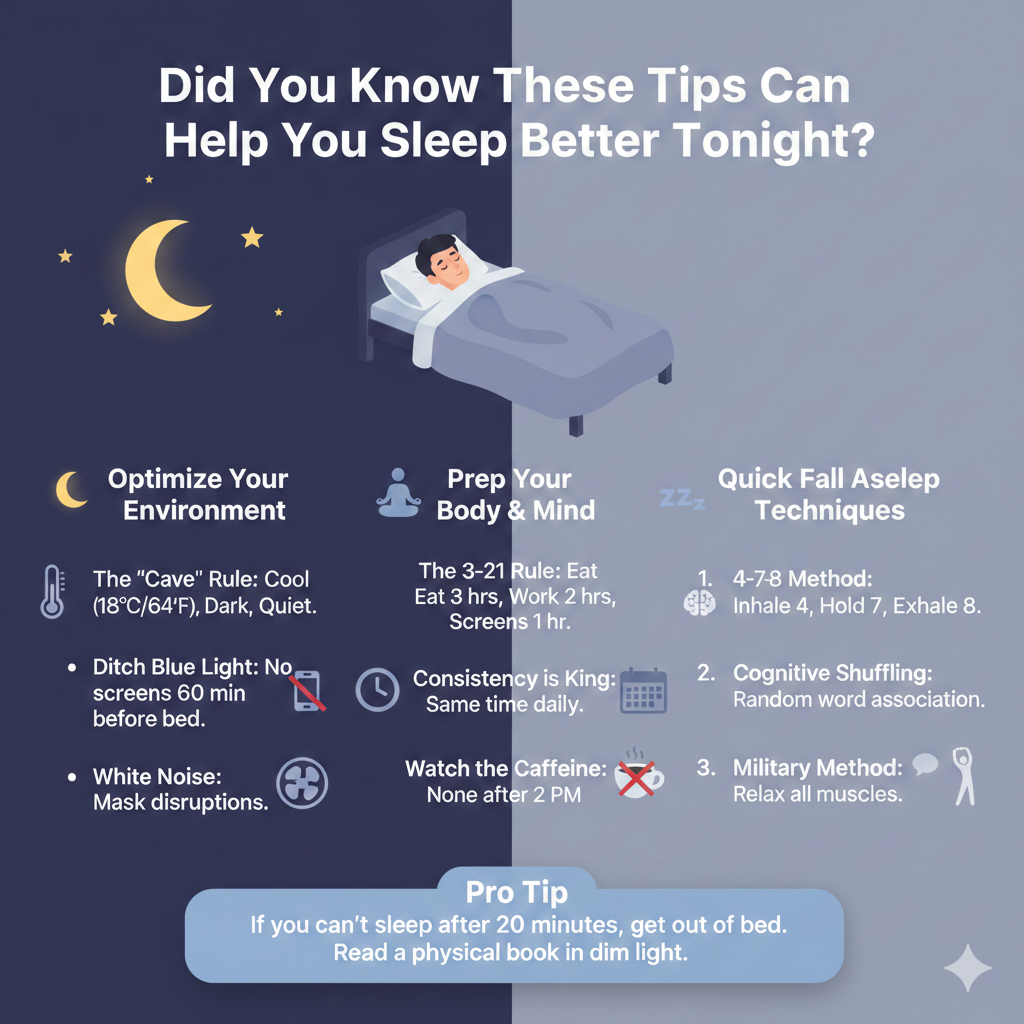
Going to bed and waking up at the same time daily trains your circadian rhythm, making it easier to fall asleep and wake up naturally. Even on weekends, try to stick close to your schedule.
2. Create a Relaxing Bedtime Routine
A calming routine signals to your brain that it’s time to sleep. Examples include:
- Reading a book
- Taking a warm shower
- Listening to soft music or a podcast
- Practicing meditation or deep breathing
Even 10–20 minutes of a bedtime ritual can improve sleep quality.
3. Limit Screen Time Before Bed
Blue light from screens suppresses melatonin, making it harder to fall asleep. Try:
- Turning off devices 1 hour before bed
- Using night mode or blue-light filters
- Replacing phone time with reading or relaxation exercises
4. Optimize Your Sleep Environment
Your bedroom should promote rest:
- Keep the room cool, dark, and quiet
- Invest in a comfortable mattress and pillows
- Use blackout curtains or eye masks
- Consider white noise machines or earplugs if needed
A supportive sleep environment makes falling asleep easier and reduces nighttime awakenings.
5. Watch What You Eat and Drink
Your diet affects sleep:
- Avoid caffeine after mid-afternoon
- Limit sugar and heavy meals close to bedtime
- Stay hydrated, but reduce liquids right before sleep to prevent waking up at night
Some foods, like cherries, bananas, or warm milk, naturally support sleep by boosting melatonin or relaxing the body.
6. Exercise During the Day
Regular physical activity improves sleep quality and duration. Even moderate exercise like walking, yoga, or stretching can help you fall asleep faster. Avoid intense workouts right before bed, as they can stimulate the body.
7. Manage Stress and Anxiety
Stress is one of the biggest sleep killers. Techniques to calm your mind include:
- Deep breathing exercises
- Journaling your thoughts before bed
- Meditation or guided imagery
- Progressive muscle relaxation
A calm mind sets the stage for restful and restorative sleep.
8. Limit Naps
While short power naps can be helpful, long or late-afternoon naps can interfere with nighttime sleep. Keep naps 20–30 minutes and earlier in the day.
9. Consider Natural Sleep Aids
Some people benefit from natural sleep support like:
- Herbal teas (chamomile, valerian root)
- Magnesium supplements (consult a doctor first)
- Essential oils like lavender for relaxation
These can gently enhance your body’s natural sleep rhythm.
10. Track Your Sleep Patterns
Using a journal or sleep-tracking app can help you identify patterns and habits affecting your sleep. Awareness is the first step to making positive changes.
Real-Life Benefits of Better Sleep
People who consistently improve their sleep report:
- Better focus and productivity at work or school
- Improved mood and reduced anxiety
- Stronger immune system
- More energy for daily activities
Even one good night of sleep can make a huge difference in your mental and physical performance.
Conclusion
Good sleep is essential for health, happiness, and productivity, but many people struggle because of stress, screens, or poor routines. By following simple tips—consistent sleep schedules, limiting screen time, creating a relaxing environment, and managing stress—you can sleep better tonight and improve your life tomorrow.
Ask yourself today: “What one change can I make tonight to sleep more peacefully?” Even small adjustments can lead to restful, restorative sleep and a happier, healthier you.